WRITTEN BY ANDREA
ON THE SOUTH PACIFIC EXPEDITION FROM TONGATAPU TO VAVA’U
Second day with eXXpedition Tonga crew and the first day on the beach. We spilt into two groups. One team went to the East side of Tongatapu and the other team went to the West side. We need to confirm with the data, but we suspect we will see differences in the amount and kind of plastic pollution between the two sites. This is due to the wind direction and position of Tongatapu. The East side of the island gets the prevailing winds, and with this wind comes more plastic from offshore.
To collect data, we use an app called Debris Tracker (you can download the app here). The science team at the University of Georgia has preset the sampling sites for us, so we know exactly where to survey. Once we arrive, we measure out the transect sampling area and transects. We sample five transects that are ten meter long and five meters wide. The data we collect is uploaded to the science team through the Debris Tracker app, allowing them to then analyse data from all the eXXpedition locations.
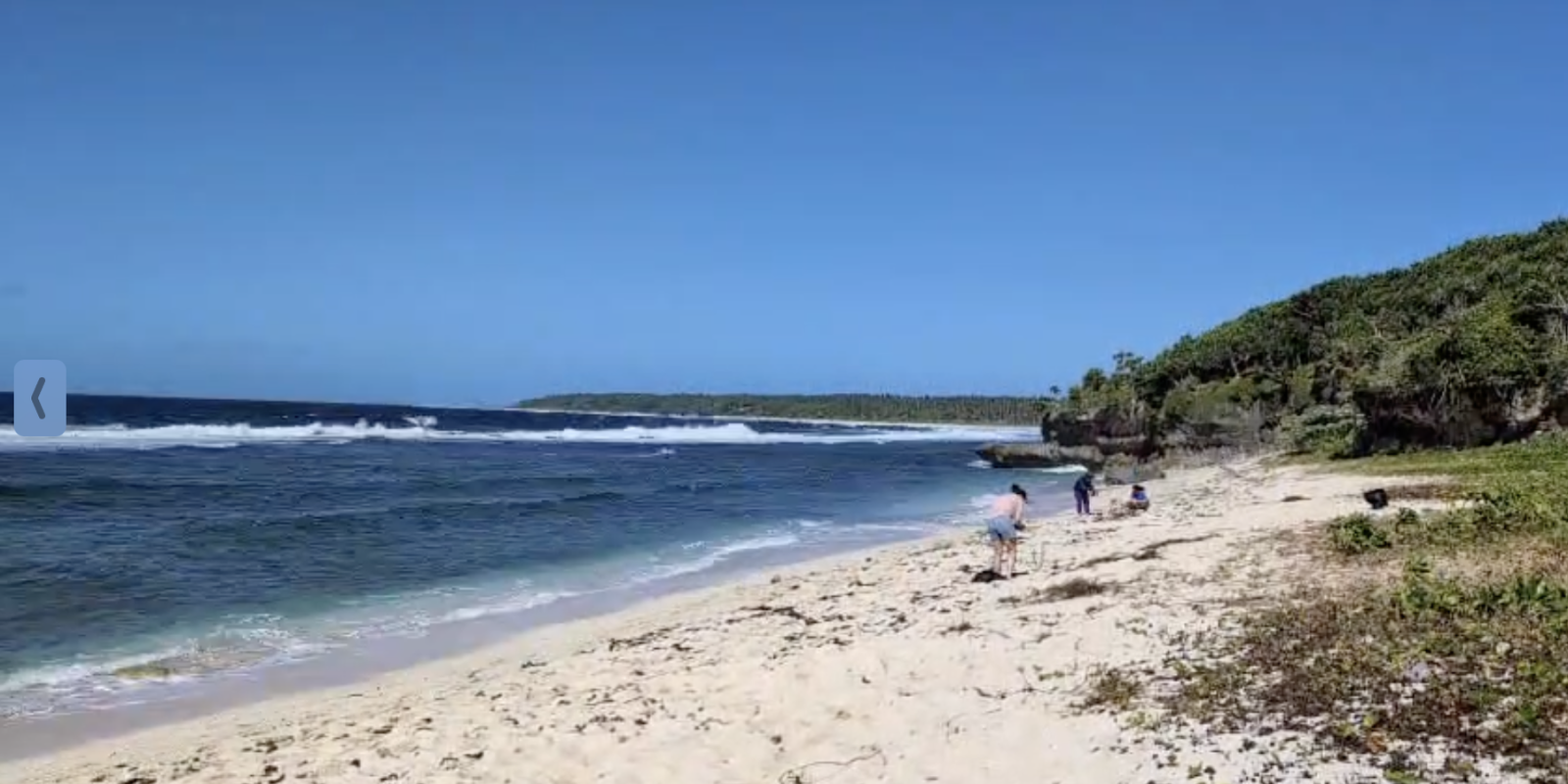
Beach survey at East Coast of Tonga Anahulu Caves beach
Video credit: Pallavi Davé
WEST SIDE TEAM
We have some initial observations from our trip to the west while we await the data analysis. Here, plastic was hidden in the mangroves, likely getting trapped in the roots system. Mangroves are natural filters for marine ecosystems, mitigating coastal erosion and the effects of freshwater runoff. Unfortunately, it looks like plastic also gets caught up in the mangrove filtering system.
The plastic on the beach looked older, for example, faded from the sun and broken into smaller pieces, than the plastic closer to land.
After we finished the beach transects, we completed land-based sampling in a local village. We didn’t find as much plastic and our taxi driver let us know that in this village, people clean the street in front of their house daily.
EAST SIDE TEAM
Our first stop was Anahula beach where we noticed the plastic was further up above the hightide line. As with the West, tangled in the plants above the high tide line was a mixture of plastics: fragments, picnic items, flipflops, cups, bottles. Anahula beach is only about 100 meters, which is the length of our transect. It was difficult to tell which plastic pollution may have come from offshore or the land. Later, we will analyse collected samples with the FTIR to shed some light on what types of plastic we found and for how long the plastic had been in the environment.
Next stop was outside a local landfill where we were attacked by mosquitos. Our surveys were parallel to the landfill. Along one transect, was a bright, pink-patterned large piece of fabric. As we walked the transect, we noticed that pieces of this fabric had broken off and migrated away from the main piece. This bright pink fabric mirrors what happens with plastic in the Ocean. With time, it breaks down, moves around, and shows up elsewhere.
Why not try data collection in your neighbourhood? It’s free to use and easy to understand. Download it here.
