WRITTEN BY RĀWINIA WIKAIRA
BURSARY RECIPIENT ON THE SOUTH PACIFIC EXPEDITION FROM AUCKLAND TO BAY OF ISLANDS VIA AOTEA GREAT BARRIER ISLAND
Ka rere taku manu i te tihi o Tamahunga
Ka topa iho ki ngā wai o Pakiri
Ka hōkai atu ki te ihu waka o Moe Karaka
Te ūranga mai o Ngāti WaiKa huri te aro ki uta, ki te whenua o Ngāti Manuhiri, ki te marae o Ōmaha
Ka tau ki te mahau o Te Kiri
Tau atu, tau atu, tau!
Mauri ora.My bird flies from the peak of Tamahunga
It swoops down to the waters of Pakiri
It soars forward to the prow of the canoe Moe Karaka
The landing place of the tribe Ngāti WaiTurning its gaze inland, to the land of the sub-tribe Ngāti Manuhiri to the courtyard of
Ōmaha
It settles upon the veranda of the meeting house Te Kiri
It has landed, it has settled!
Greetings and good health.
A grandmother waits patiently at the edge of the crashing waves, looking out. The wind murmurs intermittently, having placed a light mist over the beach since early
morning. Even the birds are lacking the courage to leave their dwellings. In the distance, sand squeaks as a girl quickly moves in the direction of the old lady, leaving messy footprints in her wake.
It’s been too long since they last saw each other. The girl is now the spitting image of her mother, with the addition of a fringe. As she comes closer into view, her head is bowed down, unprepared for the nippy weather, with her cold hands inside her pockets. As the dampened thuds draw closer, the aged woman turns around, her face softening into a warm smile ready to greet her mokopuna.
Two distinct parallels emerge.
One is a lifetime spent experiencing the world first-hand. Creating memories and connections in the natural world. Sailing between the islands of Te Moananui o Toi,
memorising the birds’ favourite songs, knowing why the wind speaks in certain tones, and viewing the environment as a teacher. The other lifetime is spent finding their place in the natural world. It is not a given. Living in the city, relying on businesses for their food, and having to pay for the time and space to exercise and maintain their health. The natural environment and its gems are inaccessible for the underprivileged.
My name is Rāwinia, and I was lucky enough to be a part of the New Zealand Leg of the South Pacific Voyage. I come from the tribe of Ngāti Wai, which directly
translates to descendants of the water. My tribe is known to be skilled fishermen, and our territory spans between the eastern coast of Northern New Zealand along with
the offshore islands. When I heard of this opportunity, to be a part of a research voyage from Auckland to the Bay of Islands through my rohe (territory), I couldn’t say no.
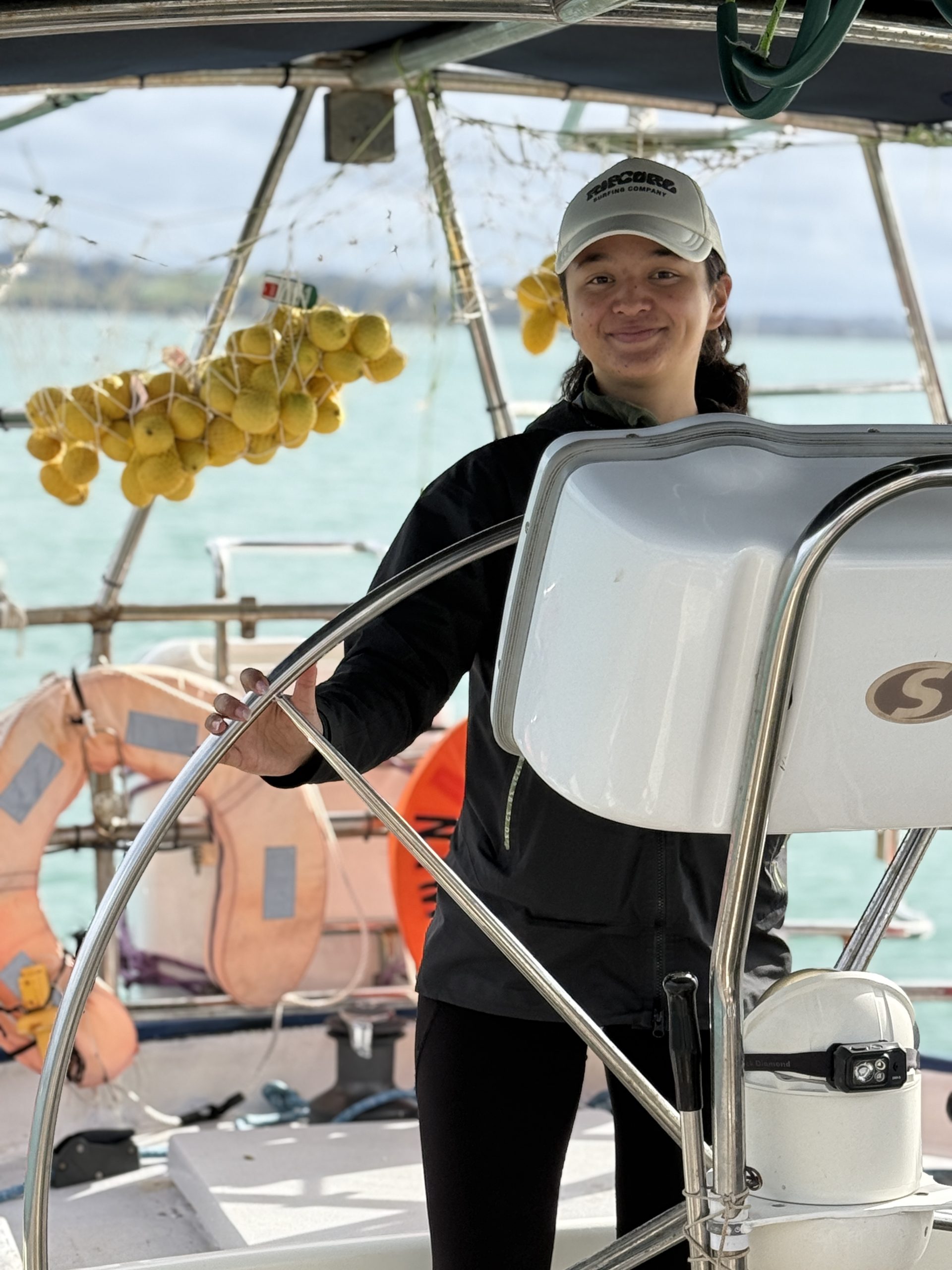
Photo Credit: Britta Baechler
Reconnecting back to what was considered everyday life for my ancestors, especially that of my great-great-great grandmother Rāhui Te Kiri, was a huge blessing. Colonisation and the systems which follow suit from that, such as confiscation of land, implementation of laws to disconnect Indigenous peoples from ecosystems, and the commodification of taonga (treasures – both intangible and tangible), have created the current world we live in today, here in New Zealand. To only hear stories of the magic Te Moananui o Toi once had is a tragedy.
“Not only did the expedition have healing qualities from a cultural lens, this research was a severe wake-up call on the impacts of microplastics on my home, Aotearoa, New Zealand.”
Not only did the expedition have healing qualities from a cultural lens, this research was a severe wake-up call on the impacts of microplastics on my home, Aotearoa, New Zealand. I think people like to compare our moana to other parts of the world to justify and validate why we don’t need to worry about plastics here; however, you can’t compare apples with bananas, and using these analogies oversimplifies what is happening and promotes a sense of complicity for a very real threat.
Sailing alongside women from across the world was what made this voyage so special. Our crew came from different countries, cultures, careers and generations, yet within days we were sharing watches, meals and tight living quarters as one big, happy family. Hearing how each woman related to the ocean back home widened my understanding of what a healthy moana looks like, and of how many of us are carrying the same worries. Being at sea together, with no escaping the weather and nowhere to hide, built a trust and openness that I don’t think would have come as quickly on land.
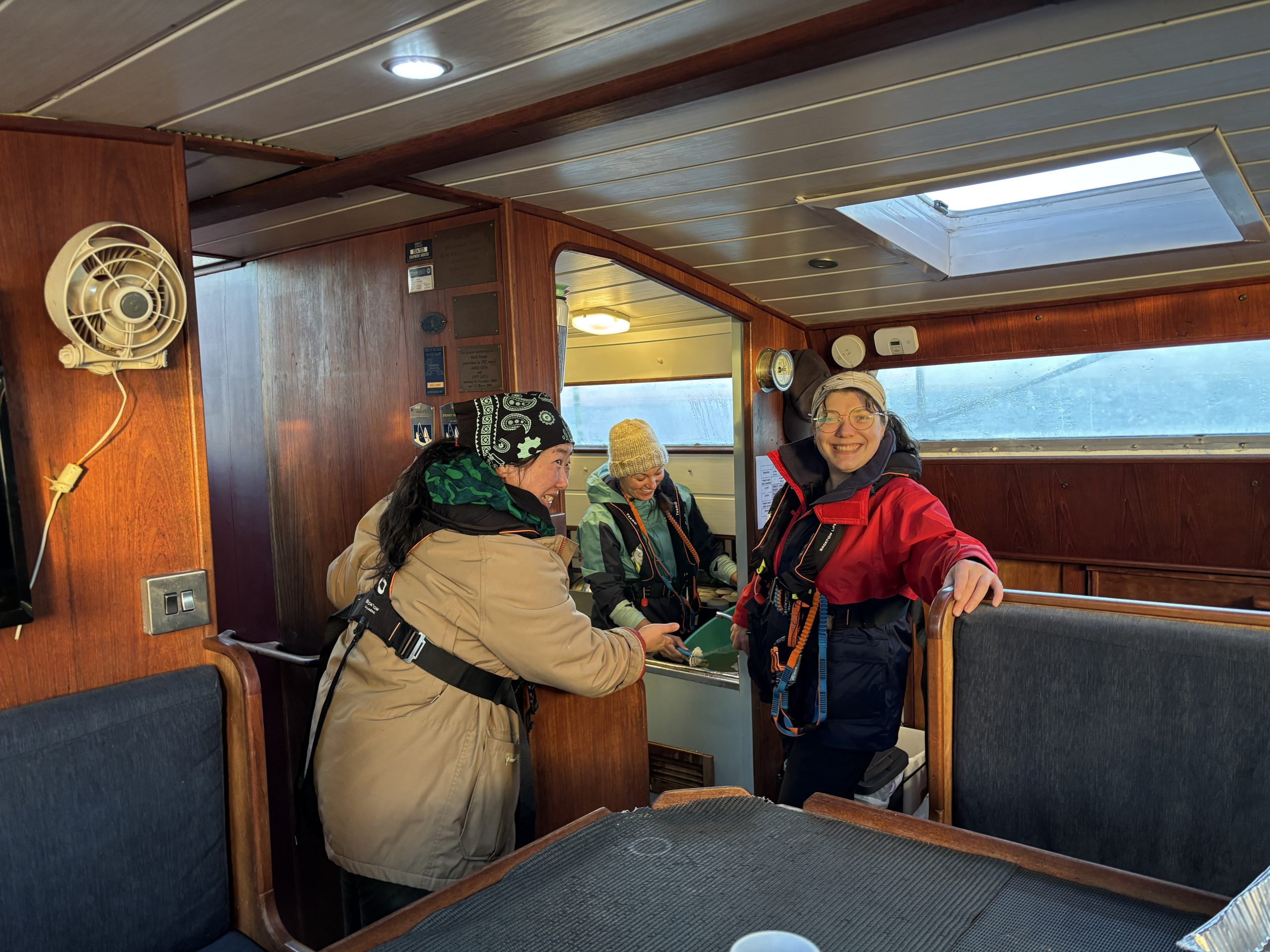
Photo Credit: Rāwinia Wikaira
The research happened both at sea and on land. On board, we collected surface water samples to measure microplastics. On shore, we surveyed beaches, studying what had washed up along the high tide line. Seeing tiny fragments of plastic in water that looks perfectly clean to the naked eye is what turned the data from numbers into something personal. Whereas, for many, once you hear of the current reality and it clicks, it can be debilitating, and a sense of helplessness does wash over.
It is never too late to start and just focus on local communities and what can be done locally, in your part of the world. Breaking things into small, workable, achievable pieces stops the overwhelming sense of hopelessness. The ocean is often personified as a woman. Wild yet beautiful, nurturing yet unpredictable. Able to give life or take it away, just as easily. From a te ao Māori perspective, landscapes are personified, and in doing so, it helps you connect and notice when they are sick or, alternatively, when they are thriving. The contemporary disconnection between people and place is glaringly obvious and needs to be addressed.
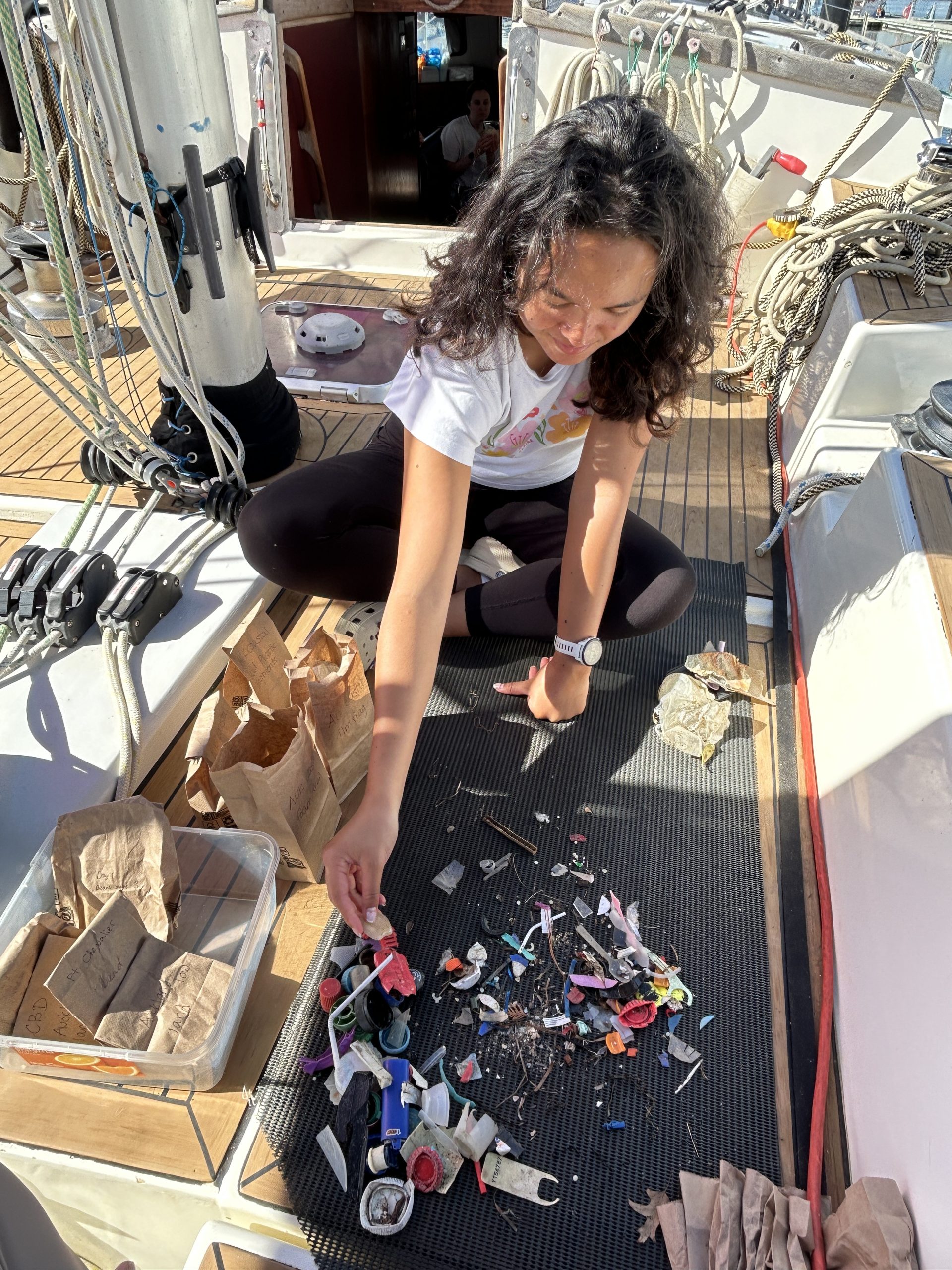
Photo Credit: Taylor Maddalene Myers
“The contemporary disconnection between people and place is glaringly obvious and needs to be addressed.”
Since the conclusion of this once-in-a-lifetime experience, I have been working with whānau at Ōmaha Marae to reconnect rangatahi back to our home in Te Moananui o Toi. Looking at traditional ways of food storage, education around the impacts of microplastics on our mahinga kai (places where food is gathered), and ways to mitigate plastic waste at the marae as well. The solutions workshops held throughout the voyage have also supported this mahi. They brought the crew together to share ideas on tackling plastic at its source, and showed me that the strongest solutions are place-based and lead by community.
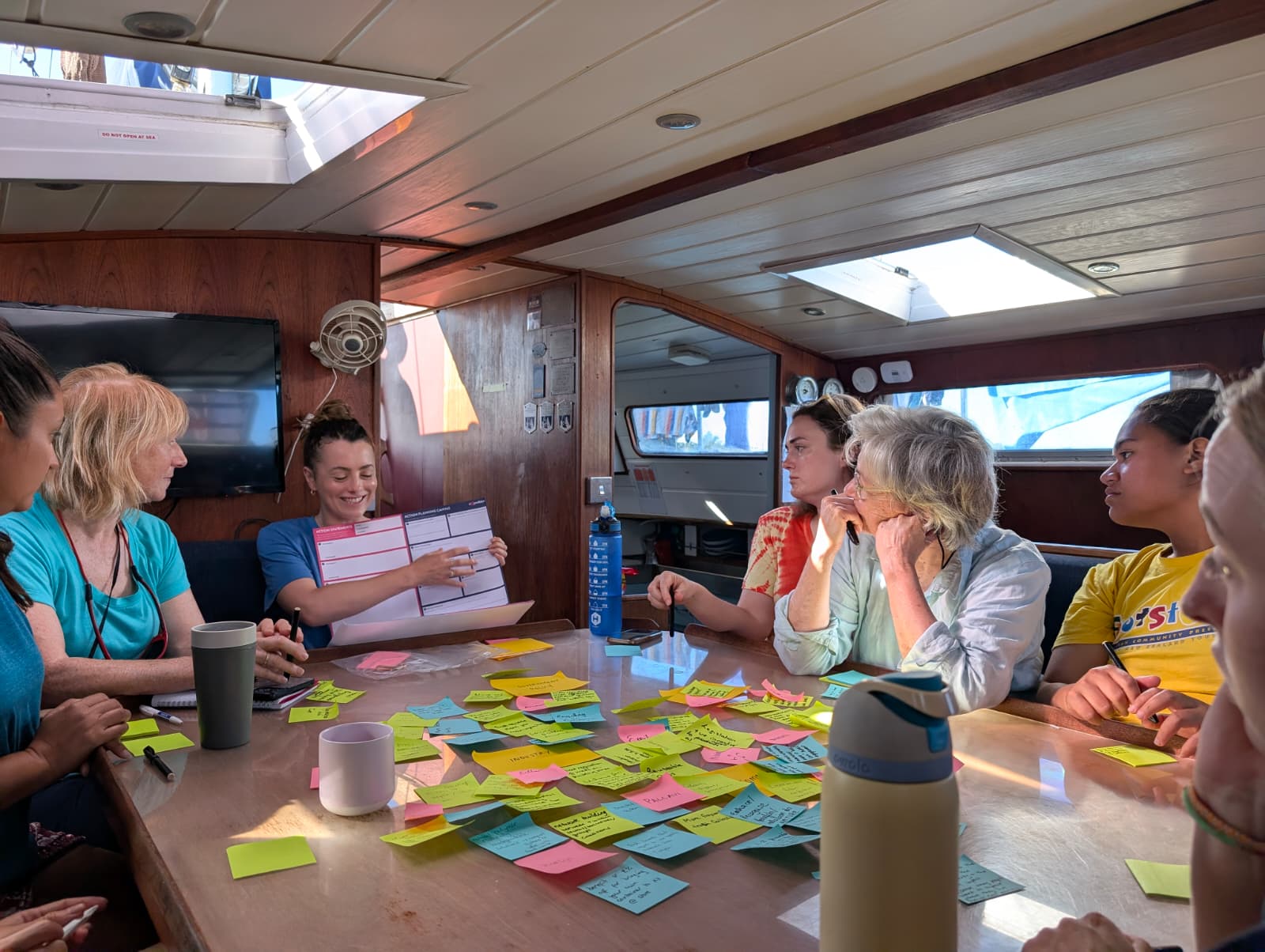
Photo Credit: Pallavi Davé
That thinking now guides the kōrero I have with whānau at Ōmaha Marae, and with rangatahi in particular, about what is happening in our mahinga kai and what we can
do about it. It has also reminded me that women around the world are doing similar mahi in their own communities, and that we are not doing this alone.
Look closer at your own backyard, coastline, river or moana.
Learn what’s happening there, and start there.
Find out more about bursaries at eXXpedition here.
Glossary
Aotearoa – New Zealand; commonly translated as “and of the long white cloud”
kōrero – conversation, discussion, to speak
mahi – work, project, effort
mahinga kai – places where food is gathered; traditional food-gathering sites and practices
marae – the communal gathering place of a whānau, hapū or iwi, including the meeting house and courtyard
mauri ora – a greeting wishing life force and wellbeing
moana – ocean, sea
mokopuna – grandchild or grandchildren
Ngāti Wai – the author’s tribe, whose territory spans the north-eastern coast andoffshore islands of Aotearoa; descendants of the water
rangatahi – young people, youth
rohe – territory, region
taonga – treasures, both tangible and intangible
te ao Māori – the Māori world, a Māori worldview
Te Moananui o Toi – the great ocean of Toi, the ocean and islands of the author’s tribal territory
whānau – family, extended family
