As I packed and departed the UK amidst a heatwave (35 °C in London), part of me was looking forward to the colder climate of Arctic Greenland. But while temperatures were comparatively cooler, the Arctic was experiencing its own heatwave.
Visiting the Ilulissat Icefjord, where the Sermeq Kujalleq glacier reaches the sea was breathtaking. This is one of the largest (6 km x 55 km, covering an area of 66,000 football fields!) and most active glaciers in the world. While mesmerised by the majesty of the glacier, I could hear cracks, rumbles and splashes as ice calved off. There were countless icebergs in the sea in front of it, and throughout Disko Bay. In fact, there were so many icebergs that sailing into Ilulissat onboard a keeled yacht, like Sea Dragon, was not possible, and our voyage began some miles south in Aasiaat.
Sailing from Aasiaat, north to Qeqertarsuaq (Disko Island), the distinctive rumble and crashing of calving icebergs surrounded us. The sea was glassy. The sun was blazing in a cloudless sky. And for hours we sailed past glistening, calving icebergs, all originating from the Sermeq Kujalleq glacier.
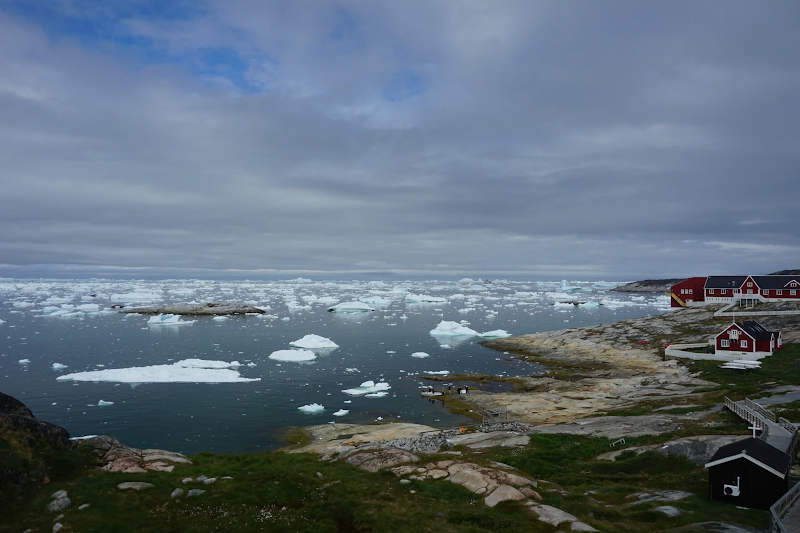
Photo credit: Winnie Courtene-Jones
A few days later, as the Arctic heatwave continued, we arrived in Sisimiut. During our research transects and beach clean (in T-shirts, having rapidly removed our outer jackets and thermals), we spoke with local guide Jan Banemann, who said that these summer temperatures were not normal, but were increasing in their frequency. This same day, it reached 20 °C in Nuuk.
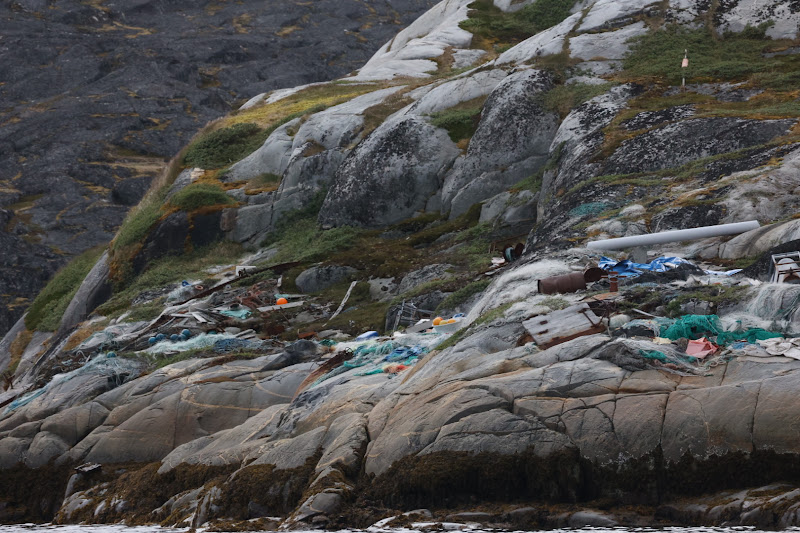
Photo credit: Lyssa Manning
While each year the Sermeq Kujalleq glacier produces thousands of tons of icebergs, the quantities are increasing. More icebergs = less ice on the glacier. Scientists studying the Icesheet are finding that the glacier is retreating and becoming thinner, largely as a result of climate change and increasing global temperatures.
What has this got to do with plastics? I hear you asking.
The vast majority (99%) of plastic is made from petrochemicals (fossil fuels: oil). Annual global production and demand for plastics has increased, reaching > 460 million metric tons per year. The reliance on fossil fuel feedstock, and the energy used during processing, means that substantial carbon emissions are involved throughout the plastic lifecycle (i.e. extraction, production, transportation, use and disposal)¹.
Plastics account for 4-5% of all greenhouse gas emissions²; that’s more than the global aviation sector (2.4%)3.
Plastic pollution is indubitably linked with climate change. Without meaningful action, it is estimated that by 2050 the greenhouse gas emissions from plastic could reach over 56 gigatons – nearly 10% of the entire remaining carbon budget for limiting global warming to 1.5°C.
However, we all have agency.
Reducing plastic production can address two global problems – climate and pollution.
Greenhouse gas emission cuts from a reduction in plastic production serve towards maintaining commitments to the Paris Agreement (limiting global temperature rise to 1.5°C), as well as reducing socio-economic and environmental impacts.
We all have a role, and we don’t have time to waste.
There are a myriad of solutions and actions we can take (individuals, communities, businesses, and policy). From reducing plastic consumption, to introducing circular economy systems into your community/workplace, increasing awareness and educating others, working with local/national decision-makers, and writing to your government.
This trip was a reminder that even Arctic Greenland, remote, raw and sparsely inhabited, does not escape the impacts of plastic pollution or climate change. However, this trip also served as a powerful reminder of the agency we each have, and how we can each use our skills, networks and ability to leverage positive change.
¹ Scientists Coalition for an Effective Plastics Treaty (2023) Plastic pollution at each life stage, https://zenodo.org/records/16366285
² Karali et al, (2024), Climate Impact of Primary Plastic Production, https://escholarship.org/uc/item/12s624vf#page=12
3 EESI (2022), Issue Brief: The Growth in Greenhouse Gas Emissions from Commercial Aviation. https://www.eesi.org/files/IssueBrief_Climate_Impacts_Aviation_2019rev2022.pdf
